
Should You Sell First or Buy First in Roanoke VA?
For Roanoke homeowners who need to move from one house to another, the hardest part is usually not deciding that they want to move. It is figuring out the order of operations.
Do you list your current home first and risk needing somewhere to go quickly? Do you shop for the next home first and risk carrying two homes at once? Do you try to write an offer with a home-sale contingency? The right answer depends on your equity, financing, timing, neighborhood, and how competitive your next purchase will be.
In today's Roanoke market, this decision should not be made from guesswork. A seller in Cave Spring with a well-updated home may have a different path than a buyer moving up in Salem, a family looking in South Roanoke, or an owner trying to leave a rural property outside the city. Before choosing a strategy, it helps to understand what each path actually changes.
Why This Decision Feels So Tuff

Selling and buying at the same time creates pressure from both sides.
On the selling side, you want enough time to prepare the house, price it correctly, negotiate well, and avoid accepting a weak offer just because you feel rushed. On the buying side, you want enough flexibility to make a strong offer when the right home appears.
That is why many homeowners start by looking at broad advice online and still feel stuck. National advice does not always match what is happening in Roanoke, Salem, Vinton, Botetourt, Franklin County, or Smith Mountain Lake. Local inventory, price range, school zones, commute patterns, condition, and buyer demand can all change the best move.
If you are still early in the process, J&D's page for selling a home in the Roanoke area is the natural place to start because the first question is usually what your current home could realistically do in today's market.
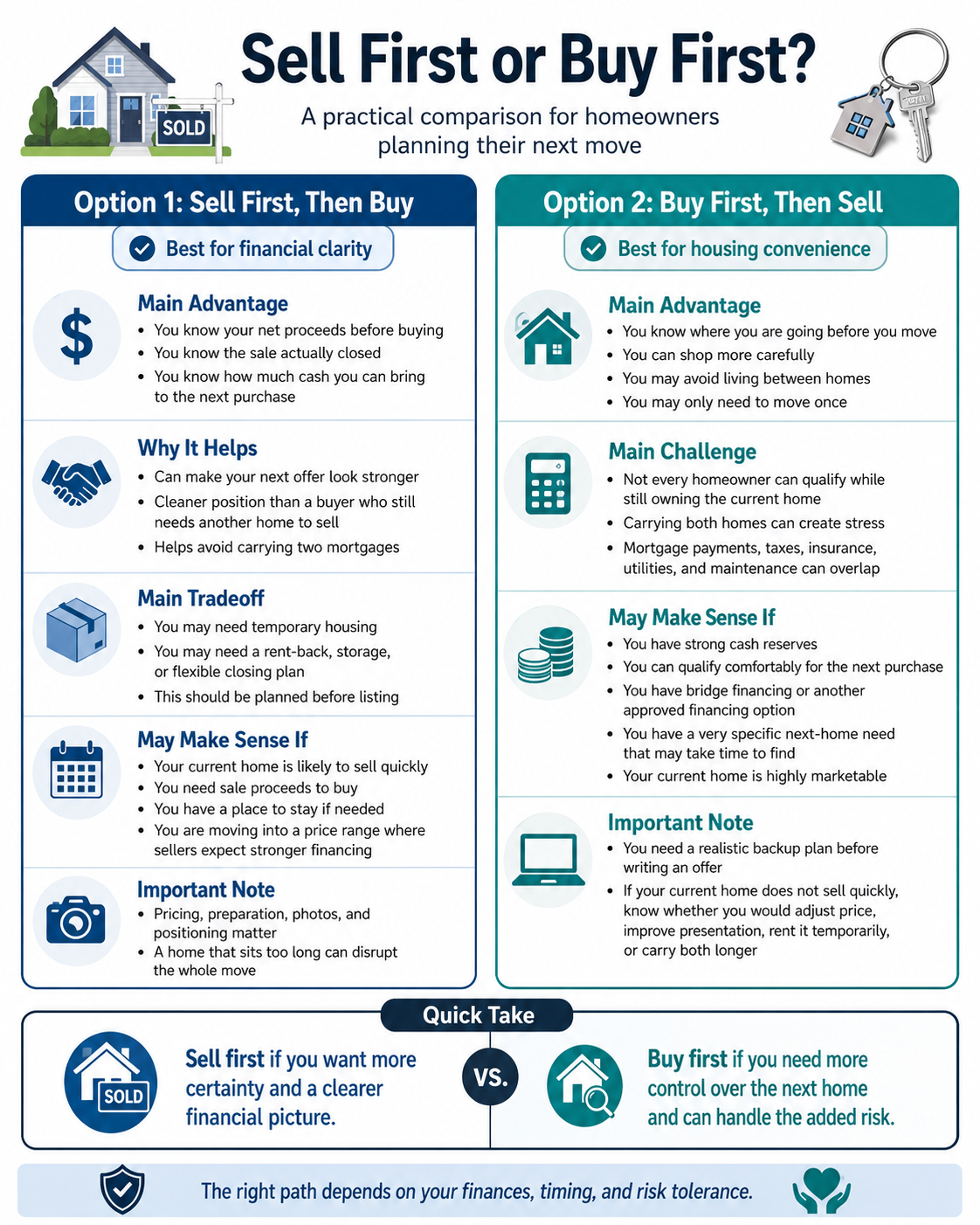
Option 1: Sell First, Then Buy
Selling first gives you the clearest financial picture. You know your net proceeds, you know whether the sale closed, and you know how much money you can bring into the next purchase.
That can make your next offer stronger. A buyer who has already sold, or who has cash ready from a sale, may look cleaner to a seller than someone whose purchase depends on another home selling later.
The tradeoff is housing. If you sell before finding the next home, you may need temporary housing, a rent-back agreement, storage, or a flexible closing plan. This can be manageable, but it needs to be planned before the listing goes live.
Selling first may make sense when your current home is likely to sell quickly, you have a place to stay if needed, you need the sale proceeds to buy, or you are moving into a price range where sellers expect stronger financing. It can also make sense if you want to avoid carrying two mortgages.
This is where pricing and preparation matter. A home that is priced well, photographed well, and positioned correctly gives you more control. A home that sits longer than expected can throw off the entire move. J&D's guide on what actually makes a house sell fast in Roanoke is useful here because the goal is not just to list. The goal is to create a sale you can confidently build the next step around.
Option 2: Buy First, Then Sell
Buying first can feel better emotionally because you know where you are going. You can shop carefully, avoid rushing into the wrong home, and move once instead of living between places.
The challenge is financial risk. Not every homeowner can qualify for the next purchase while still owning the current home. Even if you can qualify, carrying both homes for a period of time can create stress. Taxes, insurance, utilities, maintenance, and mortgage payments do not pause just because the old house has not sold yet.
Buying first may make sense when you have strong cash reserves, enough income to qualify comfortably, bridge financing or other approved financing options, or a very specific next-home need that may take time to find. It can also make sense if your current home is highly marketable and you are comfortable with the risk if it takes longer than expected.
This path needs a realistic backup plan. If the current home does not sell in the first few weeks, what changes? Would you adjust price? Improve presentation? Rent it temporarily? Carry both longer? The answer should be clear before you write an offer on the next property.
Option 3: Use a Contingency
A home-sale contingency means you make an offer to buy the next home, but the purchase depends on selling your current home. This can solve the timing problem, but it can also make your offer less competitive.
In a slower market or on a listing that has been sitting, a seller may be open to that structure. In a competitive situation, especially on a well-priced home with multiple interested buyers, a seller may prefer an offer with fewer moving parts.
The strength of a contingent offer depends on the details. Is your current home already listed? Is it under contract? How likely is it to close? Is the price realistic? Are inspection, appraisal, and financing risks already reduced? A contingency attached to a strong listing is different from a contingency attached to a home that has not hit the market yet.
For sellers trying to understand how this works from the other side, J&D's article on navigating the contingency process as a seller explains why the details matter. Contingencies are not automatically bad, but they need to be handled clearly.
What Roanoke Homeowners Should Look At First
Before deciding whether to sell first or buy first, look at the facts around your current home and your next purchase. The most useful questions are usually practical:
How much equity do you likely have after selling costs?
Could you qualify to buy before selling?
How quickly are comparable homes selling in your neighborhood and price range?
How specific is your next-home search?
Do you have somewhere temporary to stay if the timing does not line up?
Would carrying two homes create real financial pressure?
How competitive will your next offer need to be?
Those answers can change the strategy. A homeowner with strong equity and flexible timing may have several options. A homeowner who needs sale proceeds for the next down payment may need a more careful listing and closing plan. A buyer searching in a tight school-zone or one-level-home category may need more patience before making a move.
This is where local advice matters. The right plan should be based on comparable sales, current active inventory, buyer demand, financing, and the realities of your next search.
The Moving Timeline Matters More Than People Think
A lot of stress comes from treating the sale and purchase as two separate transactions. They are connected.
If you sell first, the listing date affects when offers come in, when inspections happen, when the appraisal is ordered, when closing can happen, and how much time you have to find the next home. If you buy first, your offer terms affect when you need to list, how quickly you need to respond to the market, and how much pressure you may feel if the old home does not move quickly.
A good plan works backward from the real constraints. School schedules, job relocation, loan approval, repairs, moving logistics, and closing timelines all matter. The goal is not to make the process perfect. The goal is to avoid preventable surprises.
For homeowners still weighing the buying side of the move, J&D's page on buying a home in the Roanoke area can help frame what needs to happen before you start touring seriously.
Do Not Let Convenience Pick the Strategy
It is tempting to choose the path that feels easiest today. Selling first can feel too uncertain. Buying first can feel more exciting. A contingency can feel like a simple middle ground.
But convenience is not the same as a good plan.
If selling first gives you the strongest financial position, it may be worth solving the temporary housing problem. If buying first protects you from settling for the wrong home, it may be worth building a stronger financial cushion before you start. If a contingency is the only realistic path, it should be structured in a way that gives the seller confidence instead of making your offer look fragile.
The best choice is the one that protects your money, your timing, and your ability to make clear decisions under pressure.
Bottom Line
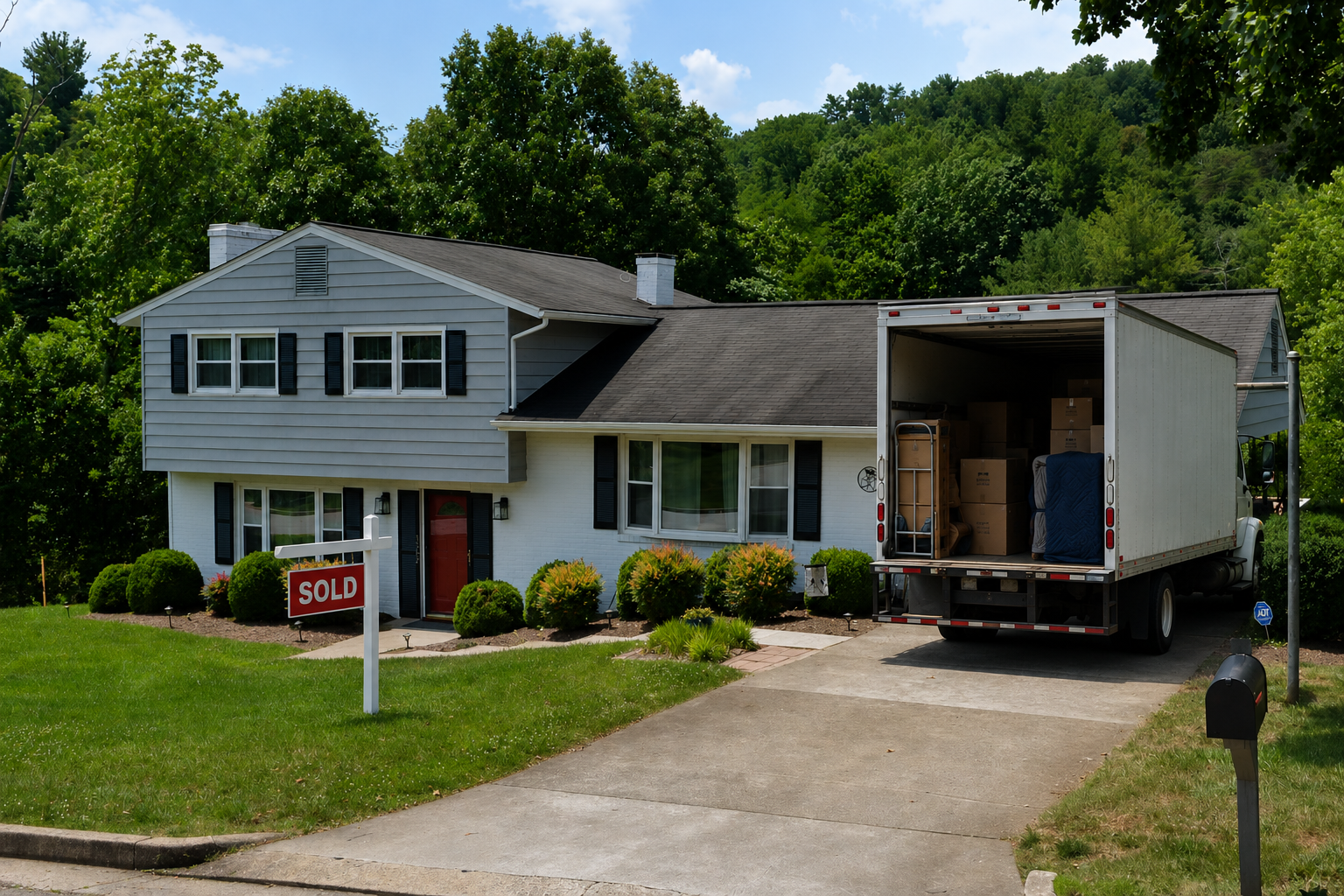
If you need to sell one home and buy another in Roanoke, there is no one-size-fits-all order. Selling first gives you financial clarity but can create housing pressure. Buying first gives you more control over the next home but can add financial risk. A contingency can help bridge the gap, but only when the terms make sense for the market and the seller.
The right move starts with facts: your likely sale price, your net proceeds, your financing, your next-home search, and what comparable homes are doing right now.
J&D Realty Team helps Roanoke-area homeowners think through those details before they list or buy, so the plan is based on the market instead of guesswork.
Need help thinking through the timing? Start with the current home, the next-home search, and the numbers that connect them.