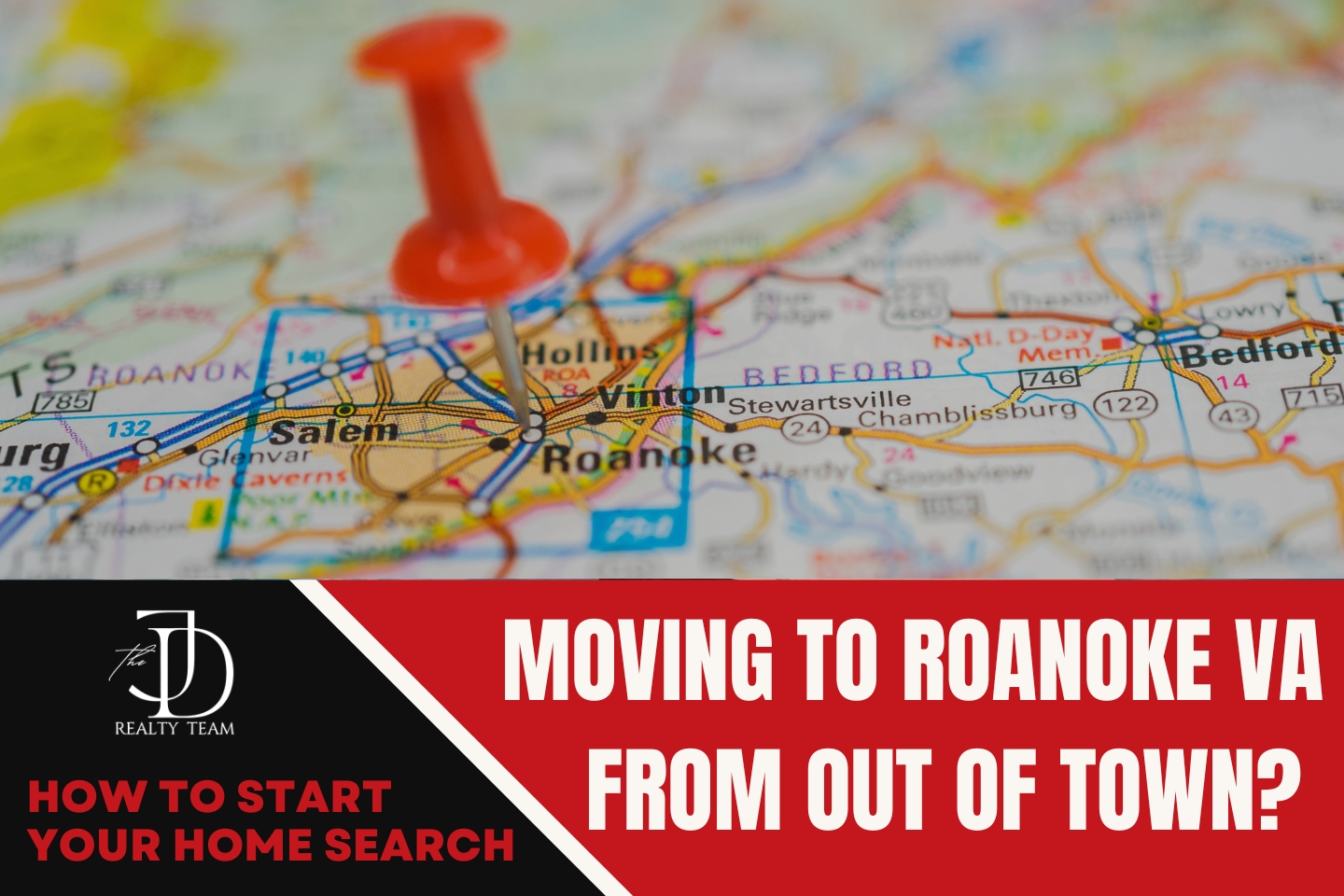
Moving to Roanoke VA From Out of Town: How to Start Your Home Search
Moving to Roanoke VA from another city can make the home search feel backwards. You may know your budget, the number of bedrooms you want, and the date you hope to move. You may not yet know which parts of the Roanoke Valley fit your daily routine, how the localities differ, or which questions a listing cannot answer from a screen.
The first step is not saving every home that looks affordable. It is building enough local context to decide where your search should concentrate. That means connecting your work location and routines to the map, comparing communities by more than a city name, and using an early visit to test the assumptions behind your search.
J&D's Roanoke-area buying guidance can help turn a broad relocation search into a more useful plan. Start with the decisions that will make the biggest difference once you are here.

Begin With the Reason You Are Moving
Relocation buyers often begin with a general request such as “somewhere near Roanoke.” That is a useful starting point, but it is too broad to guide every showing. The reason for the move should shape the first version of the search.
Someone moving for a job at Carilion may care about a different set of routes than someone working in Salem, Botetourt County, or from home. A buyer joining family in the area may value a different mix of access and neighborhood feel. A household moving for more space may accept a longer drive if the property offers land, a newer home, or room for a home office.
Write down the parts of the move that are fixed and the parts that are flexible. The fixed list may include a work location, a school or childcare routine, a preferred move window, or the need to stay near family. Flexible items might include the age of the home, lot size, renovation level, or the exact community. This distinction keeps a portal search from turning every preference into a hard boundary.
It also gives you better questions for a local agent. Instead of asking only which area is best, you can ask which locations create the commute, property type, or daily access you need.
Learn How the Roanoke Valley Fits Together
The Roanoke Valley is not one interchangeable housing market. Roanoke City and Roanoke County can appear in the same search as Salem or Vinton. Nearby Botetourt County communities may appear too, while offering different housing patterns and daily tradeoffs.
The locality attached to a listing affects more than the label in the search results. Taxes, services, school systems, and utilities can change across a short drive. So can road access, lot sizes, and neighborhood patterns. A county property may raise questions about wells, septic, private roads, or internet availability that do not come up in the same way for every city listing. Those are not reasons to rule out an area. They are reasons to compare it carefully.
J&D's Roanoke Valley city guide is a useful first pass for understanding the local map. Use it to identify communities worth exploring, then test each one against your actual work, family, and property needs. A relocation search becomes more manageable when every area on the list has a reason to be there.

Use a Scouting Trip to Test the Map
If you can visit before making an offer, do not treat the trip as a series of house tours only. Use it to learn how the area feels at the times and places that will shape your week.
Drive the route from likely neighborhoods to work, school, medical care, or family. Visit at least one area during a normal weekday period if possible. Notice the road patterns, hills, and intersections. Watch for traffic backups and the difference between a map distance and a realistic trip. A route that looks easy on a weekend may feel different during the morning or afternoon routine.
Walk or drive through more than one type of community. Compare an established neighborhood with a newer development, an in-town option with a county property, or a location near a major route with one that trades access for more land. You are not trying to choose a winner in one afternoon. You are learning which differences matter enough to change your search.
Use showings to ask local questions that listing photos cannot settle. How does the street connect to the roads you would use? What is nearby but not visible in the listing? Does the lot, slope, noise level, or surrounding development change the impression? What would a buyer want to verify during inspection or due diligence?
J&D's guide to touring a home can help you organize the property-level part of that visit. The local context around each home deserves the same attention as the kitchen and bedroom count.
Compare Homes With Local Context, Not Just Portal Filters
Online listings are useful for narrowing a search, but they cannot show every factor that affects a relocation decision. A portal may tell you the list price, square footage, photos, and stated features. It may not explain why two homes with similar numbers create different routines or carry different ownership questions.
Look at condition and updates alongside location. Ask whether an older house has the systems, layout, and maintenance profile you can realistically take on after a long-distance move. For a newer or rural property, confirm what is included, how utilities work, and whether the access or lot has implications for your budget and timeline.
Price also needs local comparison. A list price that looks attractive in an out-of-town search may reflect condition, location, competition, or a property type that is not comparable to the homes you first imagined buying. The most useful comparison is between homes that a local buyer would actually consider substitutes, not every listing inside a large map circle.
Keep a short note for each serious candidate: why it fits, what needs verification, and what tradeoff it asks you to make. Those notes help you recognize patterns after several showings and make the final decision less dependent on the excitement of one attractive listing.

Build a Search That Can Change as You Learn
Your first saved search should be a working draft, not a promise that you already understand the market. Create a primary search for the locations, price range, and property features most likely to fit. Create a second search for reasonable tradeoffs, such as a longer drive, an older home, or a different locality.
After the scouting trip and first showings, update the searches. Maybe a location you expected to avoid has a better routine than you thought. Maybe a bigger lot is not worth the upkeep. Maybe the condition of older homes matters more than an extra bedroom. The point is to let real local evidence improve the search instead of letting the original map control every decision.
Long-distance buyers also need a timeline for the parts that happen before the offer. Confirm financing, plan inspections and travel, understand how communication will work when you are not nearby, and leave room for the move itself. A local agent can help coordinate the sequence, but the buyer should still know which decisions are urgent and which can wait.
Moving to Roanoke does not require knowing every neighborhood before you arrive. It does require a process for learning the differences that affect your life. Start with your reason for moving, test the map in person, compare the localities honestly, and let each showing sharpen the next question.
Moving-to-Roanoke Home Search FAQs
What should I learn before looking at homes in Roanoke VA?
Start with your work location, weekly routines, target move window, and budget. Add the property needs that would change where you look. Then compare Roanoke City and Roanoke County with Salem, Vinton, or another nearby community instead of treating the whole area as one market.
Is Roanoke City the same as Roanoke County for a home buyer?
No. They are separate localities with different governments, services, school systems, and taxes. Their housing patterns differ too. Listings may appear together online, but the local details and recent comparable homes should be evaluated separately.
How many areas should I visit during a Roanoke relocation trip?
Visit enough areas to compare meaningful tradeoffs, not every community in one weekend. Two or three contrasting locations can teach you more than a rushed schedule of homes that all look similar online.
Can I buy a Roanoke-area home if I cannot visit often?
Yes, but the process needs extra planning. Coordinate video tours or trusted local representation, keep inspection and due-diligence questions organized, and make sure your agent understands your fixed priorities before new listings appear.
What questions should an out-of-town buyer ask about a Roanoke listing?
Ask how the location fits your real commute, what nearby conditions are not obvious in photos, which systems or utilities need verification, and how the property compares with realistic local alternatives. Those questions usually matter more than a small difference in portal filters.