Buying a Home With a Finished Basement in Roanoke VA: What to Verify First
Buying a home with a finished basement in Roanoke VA can add useful space, but the word finished does not answer every question a buyer should ask. A basement may work well as a family room, office, guest area, or storage space. It may also need careful review of moisture, drainage, heating, electrical work, windows, and the way the space is represented in the listing.
Roanoke-area homes vary by age, slope, foundation type, and neighborhood. That is why a finished basement should be treated as part of the property's condition and layout, not as a bonus to value on its own. J&D's home-buying guidance is a starting point. The specific house still needs its own questions, records, and inspection plan.
Start with how you would actually use the basement
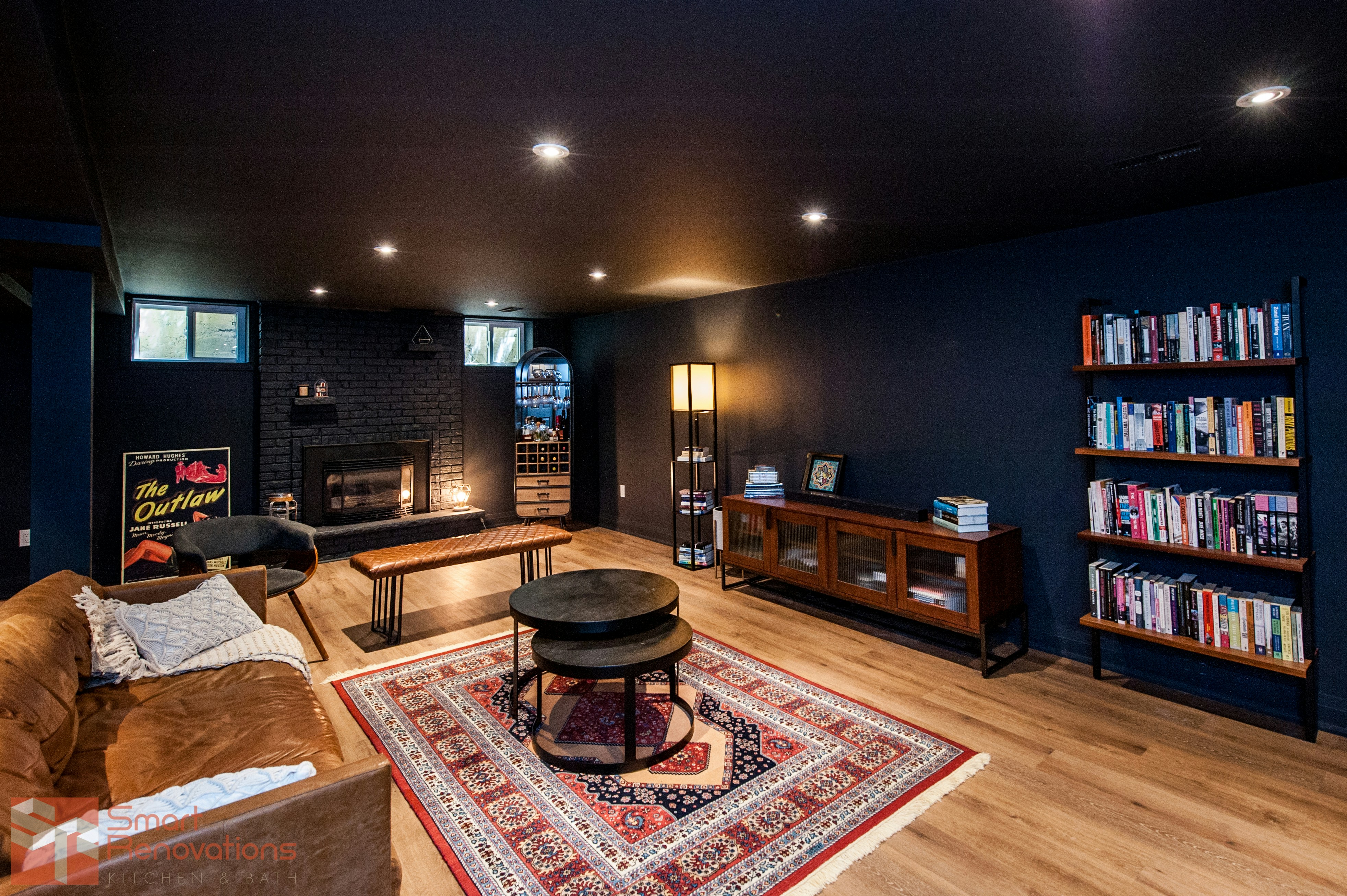
Before you decide that a finished basement really solves a space problem, picture an ordinary week. Would it be a quiet work area, a playroom, a media room, a guest space, or mostly storage? The answer changes what matters next.
Pay attention to ceiling height, stairs, natural light, temperature, and noise levels between the rest of the home. Note whether large furniture can get through the doors and turns. A large open room may look flexible online but work differently once a desk, sofa, exercise equipment, or storage shelving is in it.
Also ask whether the space is finished throughout or only in part. A finished room beside an unfinished utility area can still be useful, but the two areas should not be claimed as a "fully finished" space. Check where the electrical panel, water heater, furnace, sump equipment, and other service components are located.
Look for moisture and drainage clues before the inspection
Basements show water problems in more than one way. Look for staining, musty

odors, bubbling paint, swollen trim, warped flooring, or new-looking repairs that need an explanation. Check corners, around windows, near plumbing, and along the floor where the walls meet the slab.
Outside, look at the slope around the foundation, downspouts, grading, retaining walls, and places where water could collect. A home on a hillside may need a different drainage conversation than a home on flatter ground. That does not make either property a bad choice. It means the water-management details deserve attention before you decide how much the finished space is worth to you.
Ask what the owner has done to manage water and when the work happened. Request available invoices, warranties, permits, and service records. A dehumidifier or sump pump may be part of a sensible maintenance plan, but the presence of equipment does not explain the whole condition of the basement. An inspector or qualified specialist can help determine what needs a closer look.
Separate living space from listing language
A listing can describe a basement as finished, but that phrase does not by itself establish how the space should be counted for every purpose. Ask how the finished area is represented in the listing, tax records, appraisal information, and prior documents. If a bedroom or separate living area is advertised downstairs, ask what supports that description.
Pay attention to windows, exterior access, ceiling height, heating, electrical work, and the location of smoke and carbon-monoxide detectors. These are practical safety and usability questions. Questions about code compliance, permits, appraisal treatment, or legal use belong with the appropriate local office, appraiser, inspector, lender, or attorney.
The goal is not to turn a showing into a code inspection. It is to avoid assigning a value to a room before you know what the room can realistically do. If the basement is central to your budget or offer, make those questions part of the due-diligence plan.
Check the systems and the work behind the finishes
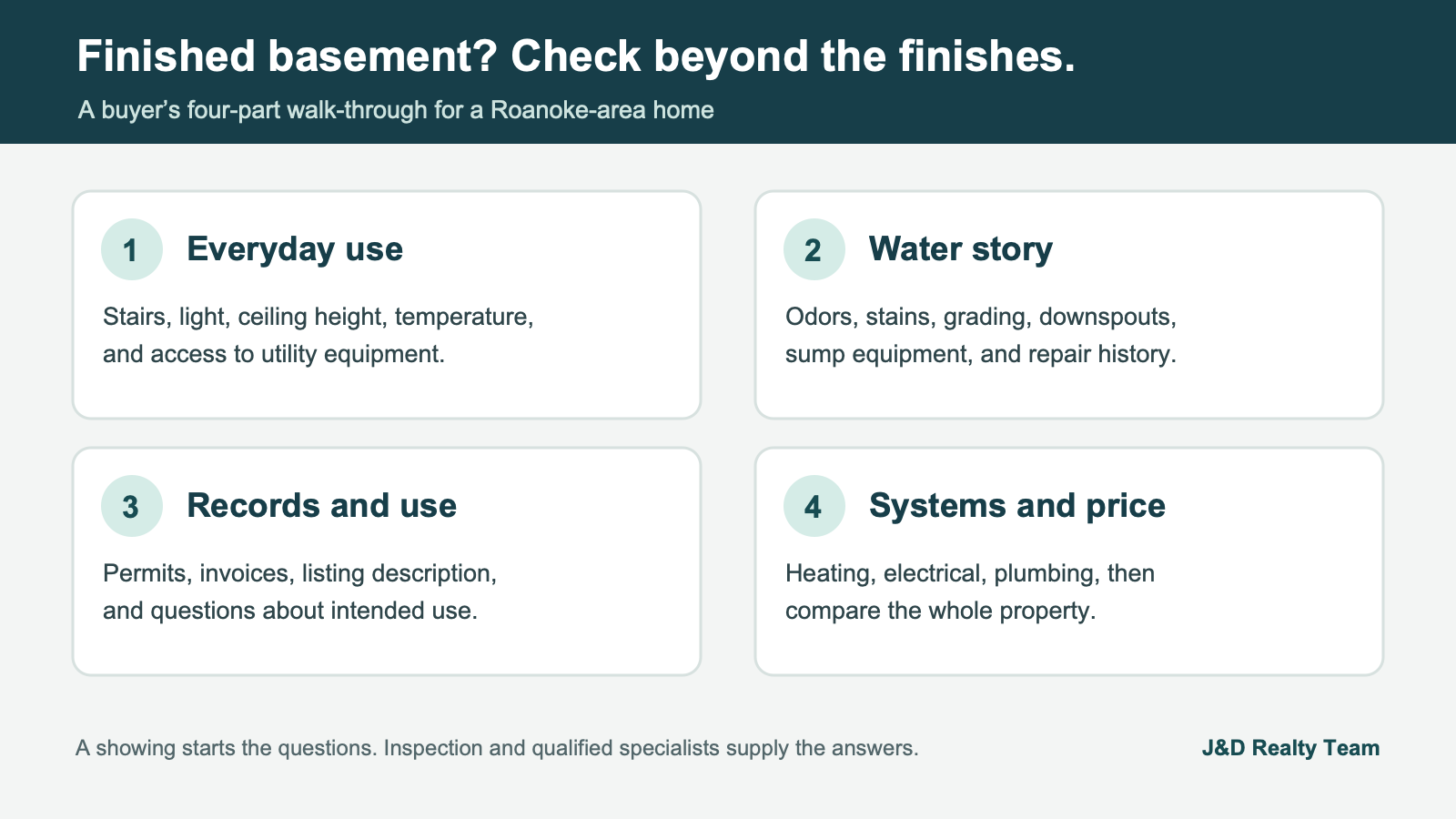
Fresh flooring and painted walls can make a basement feel complete. Look past the finishes too. Ask when the work was done, who did it, and whether records are available. If walls cover older foundation areas or plumbing, ask what can still be inspected and where shutoffs or cleanouts are located.
Test the feel of the space on a hot or cold day when possible. Compare the basement temperature with the main living areas. Listen for the HVAC system and notice whether supply and return vents appear to serve the finished rooms. A buyer may be comfortable with a space that needs a portable dehumidifier or extra insulation, but that should be a deliberate choice.
If the house has a sump pump, ask whether it has a battery backup and how discharge is handled. If there is a fireplace, wet bar, bathroom, or laundry area, add those systems to the review rather than treating them as decoration. The inspection period is the time to replace assumptions with evidence and bring in a specialist when the condition calls for one.
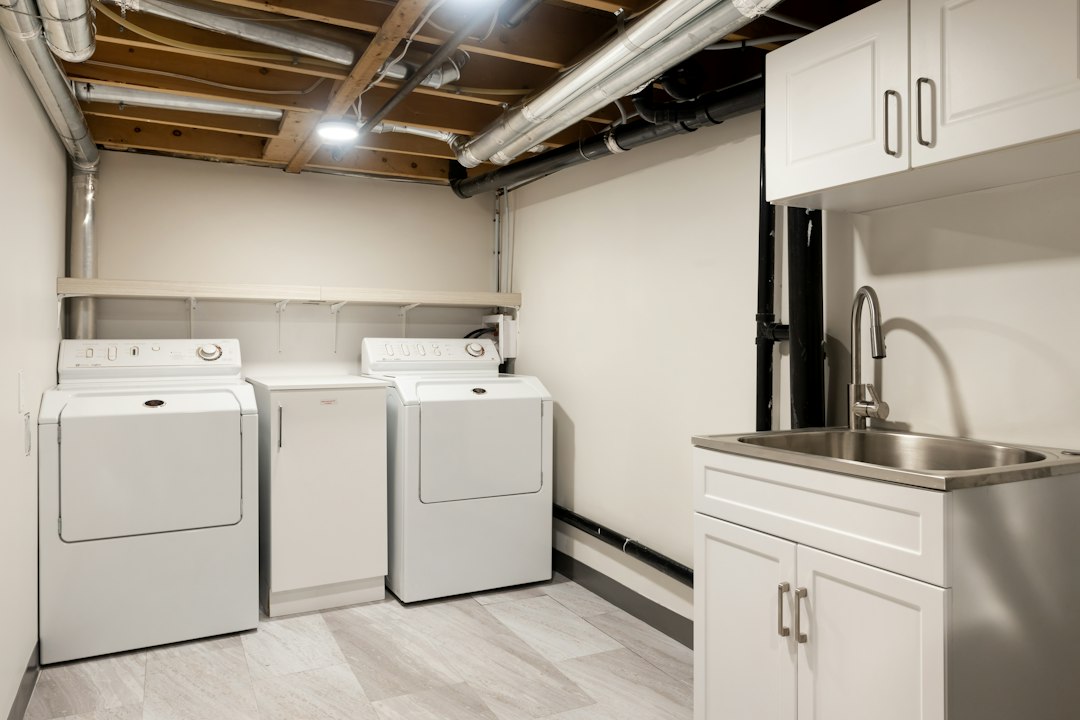
Compare the basement with the rest of the home and the price
A finished basement can change how a home fits your routine, but it should not distract from the roof, structure, major systems, lot, or location. Compare the total property with similar Roanoke Valley homes that have a similar condition and amount of usable space. A lower price may reflect needed work upstairs, while a higher price may reflect updates that do not appear in the basement.
Think about your next few years too. If you need a home office now, will the basement still work when your household changes? If guests need a private area, is the route to the bathroom practical? If you hope to sell later, will a future buyer see the same usefulness you see, or will the space raise questions that need better documentation?
J&D's Roanoke-area guide can help orient the broader location comparison, but the basement decision is property-specific. Compare the exact house, the records, the inspection findings, and the terms of the purchase together.
Finished-basement home-buying FAQs
Does a finished basement add value to a Roanoke home?
It can add useful space and may matter to a buyer's decision, but the value depends on condition, access, light, ceiling height, systems, documentation, and how the space is treated by the relevant professionals. Do not assume every finished square foot has the same value as above-grade living space.
What are the first signs of a basement moisture problem?
Look for odors, staining, bubbling paint, swollen trim, warped flooring, damp corners, and signs of repeated repairs. Also check the exterior grading, downspouts, foundation edges, and retaining walls. A visual showing is not a diagnosis, so use the inspection process and specialist review when needed.
Can I use a finished basement as a bedroom or office?
That depends on the room's layout, light, access, heating, safety features, and any applicable local requirements. Ask the appropriate inspector, local office, lender, or attorney when the intended use affects your offer or financing. Treat the listing description as a starting point, not the final answer.
What records should I ask for when a basement was remodeled?
Ask for available permits, invoices, warranties, contractor information, repair history, and records for waterproofing or drainage work. The records that exist will vary by property. Missing documentation does not automatically decide the purchase, but it should affect the questions and due-diligence plan.
How can J&D help me compare a home with a finished basement?
J&D can help you organize the property questions, compare the home with alternatives, and keep the basement in context with the location, condition, price, and offer terms. Inspectors, lenders, appraisers, local offices, and attorneys remain the right sources for their specialized conclusions.
If a finished basement is one of the reasons a Roanoke-area home caught your attention, slow down long enough to understand the space. The right question is not only whether the basement looks finished. It is whether the space works for your life and whether the evidence supports the decision.